Skip to content
Sign in

What is eSIM?

So, what exactly is an eSIM?

An eSIM is a SIM card that's already built into your phone — a tiny chip fixed inside, instead of the little plastic card you slot into a tray. The "e" stands for embedded. Because it's digital, there's nothing to wait for in the post and nothing to swap: you buy a plan, scan a QR code, and your phone downloads it in about a minute.

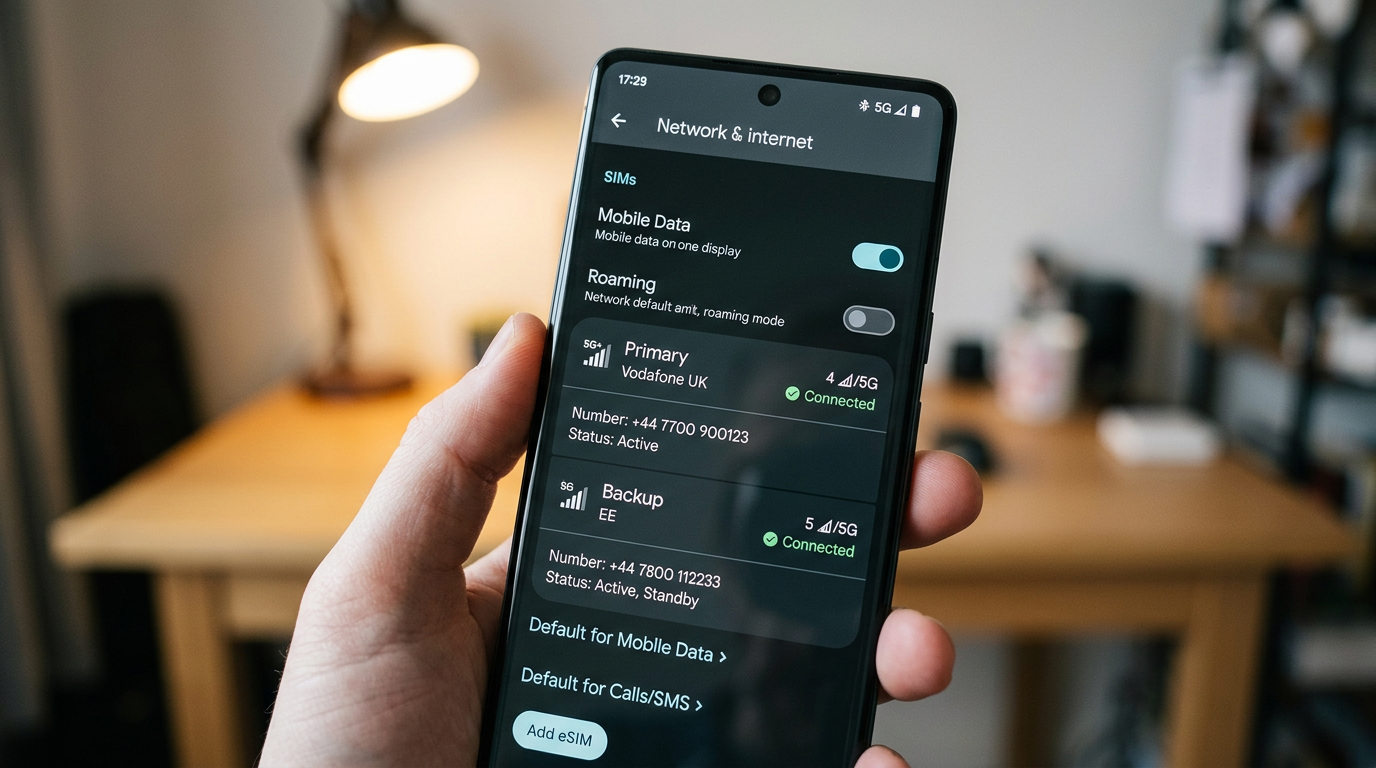
The best part for travellers is that one phone can hold several eSIMs at once. You keep your everyday number for calls and texts, add a Travinger data plan for your trip, and switch between them in Settings — no fiddling with a SIM tray, no airport kiosk.

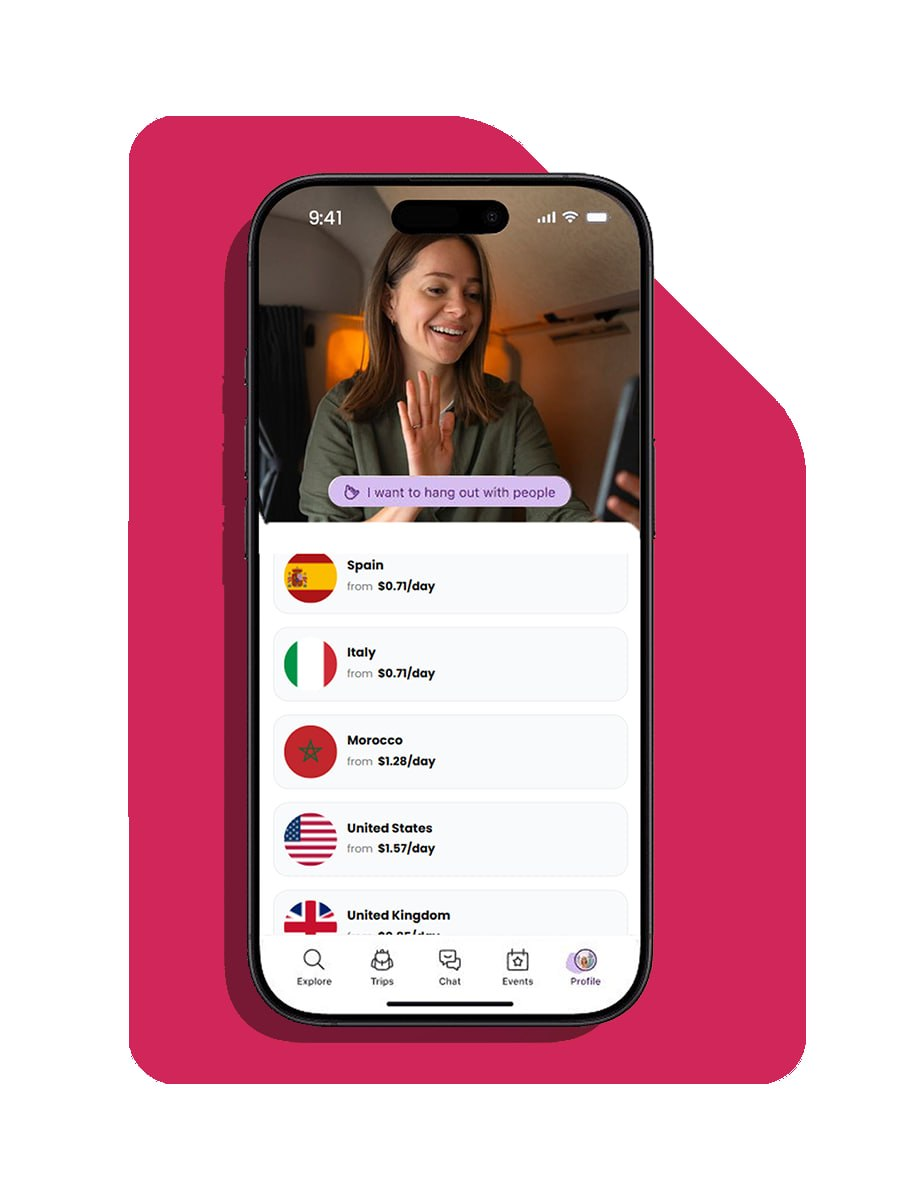
Travinger app showing country data plans on a smartphone

How an eSIM actually works

Behind the scenes, an eSIM follows a global industry standard (called eUICC) that lets your phone securely download a carrier's "profile" over the air. That profile is simply the information your phone needs to join a network and use your plan — the exact same job the chip in a plastic SIM does, just delivered as software instead of hardware.

Once it's set up, nothing about the connection is different: you're on the same local networks, at the same speeds, with the same coverage as a traditional SIM. What changes is everything around it — no shipping, no shops, no tray to open. You can carry data plans for several countries at once and switch them on the moment you land.

That's why eSIM has quietly become the standard on new phones: it's simpler for you, and more secure by design — a profile that can't fall out of your pocket or be swapped by someone else.

Benefits of Using eSIM for International Travel

Staying connected abroad usually means one of two headaches: a shocking roaming bill, or hunting for a local SIM in a shop you can't quite find. An eSIM skips both. Here's why travellers are making the switch.

Cost-effective data plans

Skip pricey roaming charges with affordable local plans that fit any trip length.

Instant activation

Install once, scan a QR code, and you're online — no SIM swap, no airport queue.

Flexibility across multiple countries

Switch carriers or regions digitally — perfect for multi-stop trips and digital nomads.

Dual SIM functionality

Keep your home number active for calls and texts while the eSIM handles data abroad.

Enhanced security

Embedded SIMs can't be stolen or swapped — your number stays yours, everywhere.

Environmentally friendly

No plastic SIM cards, no packaging, no shipping — sustainable connectivity by design.

eSIM vs physical SIM: what's the difference?

They do the same job — connect your phone to a network — but an eSIM is delivered as software instead of a plastic card. Here's how they compare side by side.

eSIM
SIM
Phone numbers

Supports multiple phone numbers on a single device.

Typically supports only one number per SIM card.

Network operators

Not tied to a single carrier; allows switching between providers digitally.

Locked to a specific carrier unless the device is unlocked.

Removal

Embedded in the device and cannot be physically removed.

Can be removed and swapped between devices.

Activation

Activated digitally via software — no need for physical handling.

Requires manual insertion and activation through a carrier.

Carrier switching

Allows remote network switching without changing SIM cards.

Requires swapping out the SIM card to switch carriers.

Multiple profiles

Can store multiple carrier profiles on one device — useful for travellers and business users.

Supports only one profile per SIM; dual SIM slots required for multiple numbers.

Device compatibility

Available on newer flagship devices (iPhones, Samsung, Google Pixel, etc.).

Compatible with most mobile phones, including older models.

Debunking eSIM Myths

eSIM technology has been around since 2016 but only started gaining significant traction in 2018. Given its increasing adoption, several misconceptions have emerged over time. As strong advocates of eSIM's flexibility and convenience, we're here to debunk some of the most common myths surrounding it.

Smiling traveller relaxing outdoors while using a smartphone

Myth 1 - eSIMs are Expensive

Contrary to popular belief, eSIMs are designed to be cost-effective, not expensive. At Travinger, our goal is to get you connected quickly and affordably, no matter where you are in the world.

Since eSIMs are distributed digitally, they eliminate production and logistics costs associated with physical SIM cards. This means lower prices for consumers — the primary costs come from backend telecom infrastructure rather than distribution.

And it's not just us — most eSIM providers offer competitive data plans in many countries. For instance, in Mexico, eSIM plans can be as affordable as local SIM card prices — without the hassle of physically swapping cards.
A person holding a smartphone in their hand

Myth 2 - eSIMs only work on the latest phones

While eSIM technology launched with newer flagships, it's now supported on a wide range of devices going back several years — including iPhone XS / XR (2018) and most Android flagships from 2019 onwards.

Before you travel, check your device's eSIM compatibility list on our Compatible Devices page. You may be surprised to find your current phone is already eSIM-ready.

Person calmly setting up their phone next to a cup of coffee

Myth 3 - eSIMs are difficult to install

Installing an eSIM is much simpler than swapping a physical SIM. After purchase, you receive a QR code by email. Go to Settings → Mobile Data → Add eSIM, scan the code, and you're connected — usually in under 2 minutes.

No SIM-tray fiddling, no waiting for a card to ship, no language-barrier kiosk runs at the airport. Everything happens digitally, even before you leave home.

Person using a smartphone showing a fingerprint security unlock screen

Myth 4 - eSIMs aren't secure

The opposite is true. Because eSIMs are embedded directly in the device hardware, they cannot be physically stolen or swapped the way a plastic SIM can. SIM-swap fraud — where a thief moves your number to their device — is much harder against an eSIM.

eSIMs also support remote management: if your phone is lost or stolen, your carrier can deactivate the profile in seconds.

Frequently asked questions about eSIMs

An eSIM is a digital, embedded SIM that lets you activate a mobile data plan instantly — no physical card needed. It does the same job as a traditional SIM, but it's programmed onto a chip that's already inside your device, so you can switch carriers or plans with a single QR-code scan.

Purchase an eSIM plan on travinger.com, receive a QR code by email, and scan it from your phone's mobile-data settings. Most installs take under 2 minutes.

For travel and dual-line setups, yes — eSIMs are faster to install, can't be physically lost or stolen, support multiple carrier profiles on one device, and let you switch networks without swapping cards. Traditional SIMs still win if you frequently move a single number between devices.

The main reasons are: lower roaming costs when travelling abroad, the ability to run two numbers on one phone, instant activation from anywhere, and zero plastic-waste from physical SIMs.

Adoption is actually growing fast — eSIM is supported on every flagship phone released since 2018 and is becoming the default in newer markets. The perceived slow uptake is mainly because some users aren't aware their phone already supports it, and a few carriers still default to physical SIM for new activations.

Yes — because the eSIM is embedded in your device's hardware, it can't be physically removed or stolen the way a plastic SIM can. This makes SIM-swap fraud significantly harder against an eSIM-only line.

Most travel eSIMs (including Travinger's) are data-only — they provide internet access but not a callable number. For voice + SMS, keep your primary SIM active alongside the eSIM, or use apps like WhatsApp / FaceTime over the eSIM data connection.

An eSIM provides the internet connection itself — once it's installed and activated, your phone uses it the same way it uses a physical SIM. To download the profile during install you'll need Wi-Fi or another working connection, but day-to-day it works wherever there's cell coverage.

An eSIM uses roughly the same amount of power as a physical SIM. Running dual-SIM (two profiles active at once) can use slightly more battery because the phone maintains two radio connections — but it's a small difference.

Not directly — eSIM profiles can't be transferred to a plastic SIM. However, you can typically port your phone number from an eSIM to a physical SIM (or vice versa) through your carrier, just as you would between any two SIMs.

Most phones from the last few years do. That includes iPhone XS / XR (2018) and newer, and most flagship Android phones from 2019 onwards — your device also needs to be carrier-unlocked. The quickest way to be sure is our Compatible Phones list, or open your phone's mobile-data settings and look for an "Add eSIM" option.

After you buy, we email your QR code within minutes. While you're on Wi-Fi at home, open your phone's mobile-data settings, choose "Add eSIM," and scan the code — it installs in about a minute. Your plan then goes live when you reach your destination and connect to a local network. There's a full walkthrough on our eSIM Setup page.

Each plan is tied to a destination — a single country or a wider region — and connects to trusted local 4G/5G networks there, the same towers locals use. You can browse coverage and pricing across 200+ destinations on our Destinations page.

Your plan's validity begins when the eSIM first connects to a network at your destination — not when you install it. That means you can set everything up before you fly without losing any days. Each plan shows its exact data allowance and number of valid days on the product page.

Your data simply stops when the allowance or the validity period runs out — there are no surprise overage charges. To keep going, top up your plan from your Travinger account to add more data without reinstalling, or buy another plan the same way; it installs in a couple of minutes. You don't need to delete the old eSIM to add a new one.

A few things are worth knowing up front: your device has to be eSIM-compatible and unlocked; travel eSIMs are usually data-only, so you keep your normal SIM for calls and texts; the QR code installs once, so don't delete the profile after setup; and an eSIM stays on the phone it was installed on rather than moving between devices like a plastic card. For most travellers these are minor trade-offs for skipping roaming fees and SIM swaps entirely.

Member Exclusive

Stay in the loop

Subscribe for travel tips, eSIM deals, and early access to new destinations.