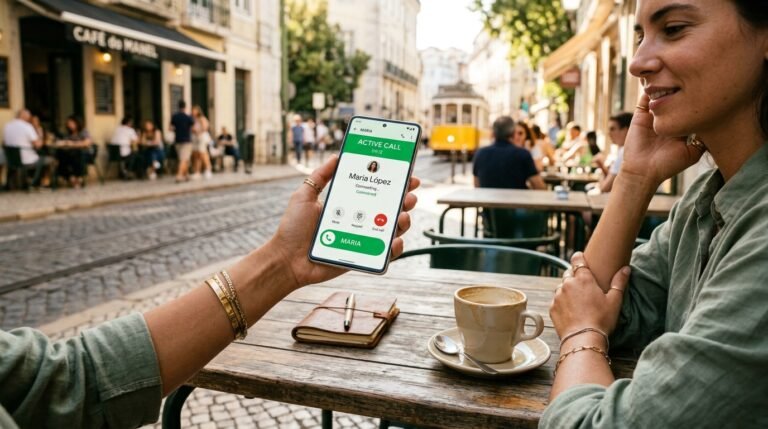
Mexico is one of Latin America’s most connected countries, and staying online there is easier than most travelers expect. At the start of 2025, the country counted 110 million internet users, about 83.3% of the population (DataReportal, 2025). Whether you land in Cancún, Mexico City or Oaxaca, you have four solid ways to get online: international roaming, a local SIM, a travel eSIM, or public WiFi. Each suits a different kind of trip and budget. This guide walks through all four, explains a new SIM registration law that took effect in 2026, and helps you pick a Mexico data plan or connection method that fits how you travel. Let’s start with a quick look at your choices.
Your four options at a glance
You can get online in Mexico four ways: roam on your home plan, buy a local SIM, install a travel eSIM, or use public WiFi. Mexico welcomed about 45 million international tourists in 2024 (Mexico News Daily, 2025), and nearly all of them needed a reliable way to connect.
The table below sums up how each method compares on setup, registration, cost, reliability and best use. Read on for the detail behind each row, including the roaming plans that treat Mexico as near-domestic and the passport rule that now applies to local SIMs.
| Method | Setup | Registration needed? | Cost basis | Reliability | Best for |
|---|---|---|---|---|---|
| Home roaming | Switch on before you travel | No (uses your home line) | Daily fee or included (Verizon TravelPass, $6/day) | High | Short US and Canada trips |
| Local SIM | Buy in-store, register with passport | Yes, passport required | Local prepaid top-ups | High | Longer stays, a local number |
| Travel eSIM | Buy online, install before landing | No plastic SIM; confirm with provider | Prepaid data package | High | Convenience, data-first travelers |
| Public WiFi | Connect on arrival | No | Free | Variable | Light use, backup, saving data |
How connected is the internet in Mexico?
Very connected, especially where tourists go. INEGI’s ENDUTIH 2025 survey counted 104.9 million internet users, or 86.1% of people aged 6 and older (Mexico News Daily, 2026). DataReportal’s Digital 2025 report puts users at 110 million, or 83.3% of the total population (DataReportal, 2025).
Those two figures differ for a reason, and it helps to know why. INEGI measures people aged 6 and older through a national household survey, while DataReportal estimates against the whole population. Neither is wrong. They simply use different age bases and methods, so treat them as two credible views of the same upward trend rather than one number to average.
Mobile access is even broader. DataReportal recorded 127 million mobile connections at the start of 2025, equal to 96.5% of the population (DataReportal, 2025). In practice, that means strong cellular signal across cities, resorts and most highways, with data speeds that comfortably handle maps, messaging and video calls.
Do connectivity levels vary by region?
Yes, and the gap matters for planning. INEGI’s ENDUTIH 2025 data shows Nuevo León leading at 93.9% internet use, followed by Baja California at 93.2% and Quintana Roo, home to Cancún and the Riviera Maya, at 92.1% (Mexico News Daily, 2026). All three sit above the national average.
The clearer divide is urban versus rural. Internet use reaches 88.9% in urban areas but falls to 75.2% in rural ones (Mexico News Daily, 2026). Popular tourist zones are firmly on the connected side, so if your itinerary sticks to cities and resorts, expect dependable coverage almost everywhere you go.
Is international roaming worth it in Mexico?
For US and Canadian travelers, roaming is often the simplest option, and sometimes free. Verizon’s TravelPass costs $6 a day for Mexico and Canada, half the $12 charged elsewhere, and many Unlimited plans include Mexico calling, texting and data at no extra cost (Verizon, 2026).
That near-domestic treatment is not unique to Verizon. T-Mobile and AT&T postpaid plans frequently bundle Mexico too, which makes roaming attractive for a long weekend or a one-week trip. The catch is that terms differ by plan and change over time, so the golden rule is simple: verify your own plan before you fly.
Roaming’s weak spot is bill shock. If your plan does not include Mexico, pay-as-you-go data can add up fast, and a forgotten download or backup can quietly burn through an allowance. Check your carrier’s Mexico terms in writing, set a data alert, and know your daily cap. For heavier data users, a prepaid option usually works out cheaper and more predictable.
Should you buy a local SIM in Mexico?
You can, and coverage is excellent, but a new registration law changes the process in 2026. Since 9 January 2026, every SIM sold by a Mexican carrier must be registered, and foreign visitors register with a valid passport (Hogan Lovells, 2026). New SIMs arrive deactivated until you complete this step.
Where and how to buy a local SIM
Local SIMs are easy to find. You can buy them at carrier stores such as Telcel and AT&T, at Oxxo convenience shops, at supermarkets, and at airport kiosks. Since the 2026 rule took effect, staff will register the line for you at the point of sale, so bring your passport and expect the SIM to activate only once registration is done. For a full breakdown of who covers what, see Mexico’s mobile networks and coverage.
PANAUT versus the new 2026 registration law
It helps to separate two very different laws. Back in 2021, Mexico tried to create PANAUT, a biometric registry that would have required fingerprints and other biometric data to buy a SIM. The Supreme Court (SCJN) declared it unconstitutional on 25 April 2022 on privacy and data-protection grounds (Library of Congress, 2022; Euronews, 2022).
The current rule is different, and this is the part travelers most often get wrong. The Ley de Telecomunicaciones y Radiodifusión (2025) revived mandatory line registration, and the regulator issued ID guidelines in December 2025. It relies on your CURP plus official ID, not biometrics, which makes it legally distinct from PANAUT (Mexico News Daily, 2026; Hogan Lovells, 2026). So to be clear: biometric registration is not currently required to buy a SIM in Mexico.
What the law means for tourists
The timeline is straightforward. The registration window opened on 9 January 2026, the deadline falls on 30 June 2026, and unregistered lines are suspended from 1 July 2026, with calls and texts blocked while 911 still works (Mexico News Daily, 2026; Hogan Lovells, 2026). Mexican nationals register with a CURP or voter ID, while foreign nationals register with a valid passport and need no CURP. Registration can be done in-store or remotely.
One caveat is worth stating plainly. The registration rule applies to lines issued by Mexican carriers. A foreign SIM or travel eSIM roaming on a Mexican network is a foreign line, but confirm with your provider. In short, if you keep your home line or use a travel eSIM, the local registration process may not apply to you, though your provider is the right party to confirm it.
Why do travelers choose a travel eSIM for Mexico?
Convenience is the short answer. A travel eSIM lets you buy a data plan online and install it before you fly, with no plastic SIM to swap. An eSIM is a GSMA specification for remote SIM provisioning, so one phone can store several operator profiles and switch between them (GSMA, 2026).
For travelers, that means you can land in Cancún with data already working, keep your home number active for calls and two-factor codes, and skip the store queue and passport registration that a local SIM now involves. It is a particularly clean fit for short trips and for anyone who wants everything sorted before departure.
Getting started takes only a few steps. You can activate an eSIM after you land or the moment you connect to WiFi, and if you are weighing data amounts and validity, our guide on how to choose the right eSIM for your trip walks through the trade-offs. Just confirm your phone supports eSIM first, which the practical tips below cover.
How good is public and hotel WiFi in Mexico?
Free WiFi is everywhere in Mexican cafés, hotels and public squares. Mexico City even holds a Guinness World Record for free public WiFi, with 21,500 hotspots recognized in November 2021 under its Internet para Todos program (Mexico News Daily, 2021). Quality varies, though, so pack a VPN.

Public access has a long history here. The México Conectado program ran from 2013 to 2018, and it has since been succeeded by the annual Programa de Conectividad en Sitios Públicos, run by the federal SICT (gob.mx SICT, 2023). Many plazas and zócalos still offer municipal WiFi as a result, and major airports typically use Telmex Infinitum hotspots.
In daily use, free WiFi is widespread in cafés and restaurants, most hotels and many Airbnbs include it, and coverage is generally reliable for messaging and browsing (Mexperience, 2025). The honest caveat is that quality is hit-and-miss and slows when networks get crowded. Treat public WiFi as a backup, avoid banking on it, and always switch on a VPN before you connect.
Which mobile network has the best coverage in Mexico?
Telcel leads for reach. In OpenSignal’s October 2025 report, Telcel won Coverage Experience with 8.8 out of 10 versus AT&T’s 4.4, while AT&T narrowly took Consistent Quality at 35.5% against Telcel’s 34.3% (OpenSignal, 2025). All three big networks serve tourist areas well.
The market has a few wrinkles worth knowing. Movistar migrated onto AT&T’s network in July 2022 and now operates as an MVNO, while BAIT, owned by Walmart, has grown fast as a budget MVNO (OpenSignal, 2025). For most travelers, Telcel’s wider footprint is the safe default outside major cities, but coverage in resorts and urban centers is strong across the board. For a deeper comparison, see Mexico’s mobile networks and coverage.
What practical tips keep you connected in Mexico?
A few habits keep you online and avoid nasty surprises. Check your phone is unlocked and eSIM-capable, download offline maps before you explore, install WhatsApp, and use a VPN on public WiFi. WhatsApp matters most: about 92% of online Mexicans used it in the third quarter of 2023 (Statista, 2023).
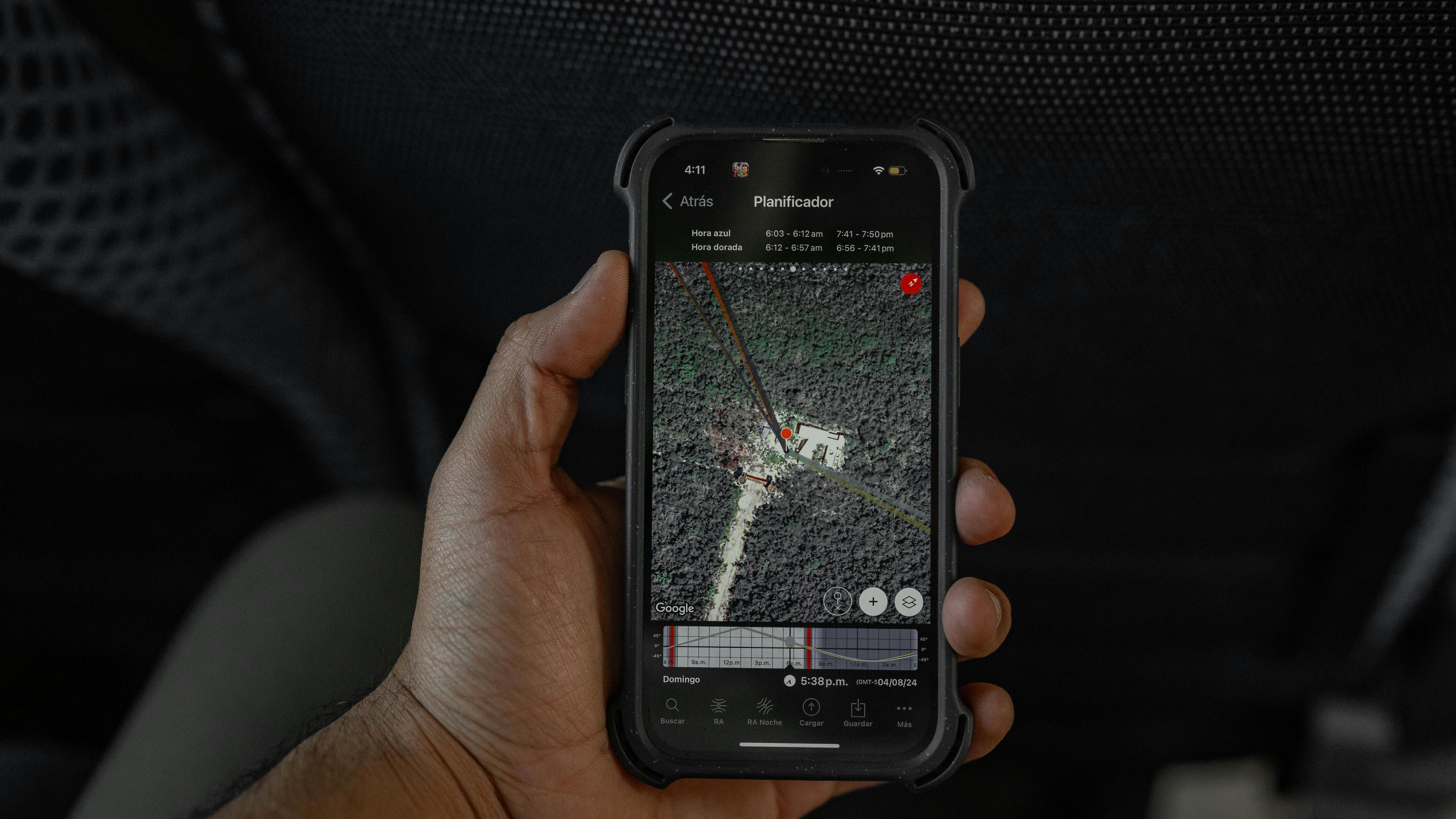
Here is a quick pre-trip checklist to run before you leave home:
- Confirm compatibility. Make sure your handset is unlocked, then check whether your phone supports eSIM so you can install a profile before departure.
- Prep your maps. Download offline maps of your destinations, which saves data and keeps navigation working in low-signal spots.
- Install WhatsApp. It is the default channel for hotels, tour operators and restaurants, so set it up before you arrive.
- Secure public WiFi. Keep a VPN switched on, and avoid banking or sensitive logins on open networks.
- Avoid bill shock. Verify your roaming terms in writing and set a data alert, or use an eSIM to keep costs predictable.
If you install an eSIM and want a walkthrough, our step-by-step eSIM install guide covers each screen, and if a profile ever misbehaves, our eSIM troubleshooting tips get you back online quickly.
Staying connected, the easy way
Staying connected in Mexico is refreshingly simple once you know your options. Short-trip visitors from the US and Canada often just switch on roaming, longer-stay travelers may prefer a local SIM with passport registration, and anyone who wants data ready on arrival can install a travel eSIM. Free WiFi fills the gaps in cafés, hotels and public squares, though a VPN is wise on open networks. Whichever route you choose, check your phone is unlocked and eSIM-capable, download offline maps, and keep WhatsApp handy. If you would rather skip the SIM queue entirely, a Travinger eSIM installs in minutes and connects the moment you land. Ready to plan the rest of your trip? Start by choosing the right data plan for how you travel, and you will be online before you clear customs.
Frequently asked questions
Do tourists need to register a SIM card in Mexico?
Yes, if you buy a local Mexican SIM. Since a 2026 law took effect, carriers must register every line, and foreign visitors register with a valid passport rather than a CURP (Hogan Lovells, 2026). New SIMs stay deactivated until you complete registration, which stores usually handle for you.
Is biometric or fingerprint registration required to buy a SIM in Mexico?
No. Mexico's Supreme Court struck down the biometric PANAUT registry as unconstitutional on 25 April 2022 (Library of Congress, 2022). The current 2026 rule uses your CURP or, for foreigners, a passport plus official ID. It does not collect fingerprints or other biometric data.
Will my US phone work in Mexico?
Usually, yes. Many US carriers treat Mexico as near-domestic: Verizon's TravelPass is $6 a day, and several Unlimited plans include Mexico at no extra cost (Verizon, 2026). Check that your phone is unlocked and eSIM-capable, then confirm roaming terms with your carrier before you fly.
Is a travel eSIM or a local SIM better for Mexico?
It depends on your trip. A travel eSIM installs before you land, needs no store visit, and keeps your home number active. A local SIM gives you a Mexican number and local top-ups, which suits longer stays but now requires passport registration under the 2026 rules.
Is public WiFi safe to use in Mexico?
It is convenient but not private. Mexico City alone offers 21,500 free hotspots (Mexico News Daily, 2021), yet open networks can expose your data. Use a VPN, avoid banking on public WiFi, and treat café or airport connections as a backup rather than your main link.
Which network has the best coverage in Mexico?
Telcel has the widest reach. It won OpenSignal's Coverage Experience with 8.8 out of 10, well ahead of AT&T's 4.4, though AT&T narrowly led Consistent Quality (OpenSignal, 2025). In cities and resort areas, all three major networks perform well, so most travelers stay comfortably connected.
What messaging app do people use in Mexico?
WhatsApp, overwhelmingly. About 92% of online Mexicans used WhatsApp in the third quarter of 2023 (Statista, 2023). Hotels, tour operators and restaurants often prefer it over phone calls or email, so installing WhatsApp before your trip makes local communication far easier.
Was this article helpful?
Thanks for your feedback!