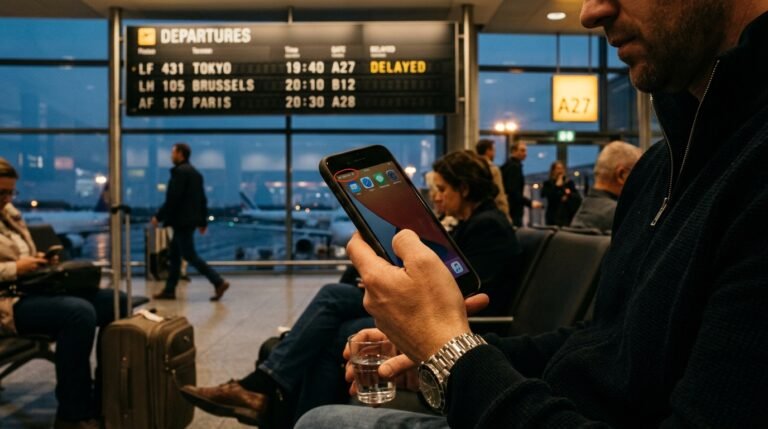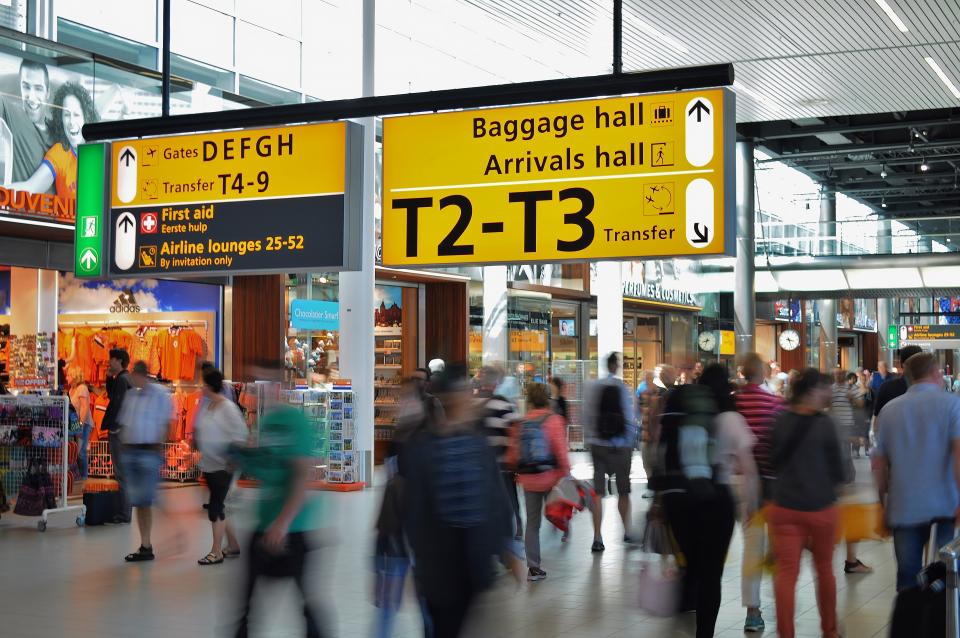
The first hour after landing sets the tone for the whole trip, and it goes far more smoothly when you work through it in order: get online, clear the airport, sort money and transport, and let someone know you’ve arrived. Do those four things calmly and you’ll be on your way to your bed without the usual scramble. Here’s the checklist, step by step.
What should you do in the first hour after landing?
Get connected first, because almost everything else depends on it. The moment you can use your phone, you can call a ride, follow a map, translate a sign and message home — so before you even reach passport control, switch your data on. This is where planning ahead pays off: if you installed a travel eSIM before you flew, there’s nothing to buy at the airport. You just enable it and you’re online. Here’s how to activate an eSIM on arrival, and if you haven’t set one up yet, the full walkthrough for installing a travel eSIM takes only a few minutes.
Get through immigration and customs
Have your documents in hand before you join the queue, and the whole thing takes minutes. Keep your passport, any printed or digital arrival card, and your visa or onward-travel proof together so you’re not digging through a bag at the desk. Follow the signs for arrivals, be ready to say where you’re staying and how long for, and collect your bag before heading through customs. If you’re unsure whether you need to declare anything, the “nothing to declare” and “goods to declare” channels are usually clearly marked — when in doubt, ask an officer rather than guessing.
Sort money before you leave the terminal
Have a way to pay ready before you step outside, whether that’s a card that works abroad or a small amount of local cash. Airport exchange desks tend to give poor rates, so it’s often better to withdraw a modest amount from a bank ATM in the terminal or simply rely on a travel-friendly card. You don’t need a lot — just enough for a taxi, a bottle of water and any small fees. Because you’re already online through your eSIM, you can check the going rate quickly and avoid being talked into a bad deal.
Find your route to your accommodation
Know how you’re getting to your bed before you walk out of arrivals. Decide in advance whether you’re taking an official taxi, a ride-hailing app, a train or an airport bus, and check roughly what it should cost so nobody can overcharge you. Save your accommodation’s name and address as a screenshot in the local language — handy for a driver who doesn’t share yours — and pull up the route on a map. With mobile data live, booking a ride or following directions is effortless; without it, this is exactly where new arrivals get stuck.
Tell someone you landed
Fire off a short message to let a friend or family member know you’re on the ground. It takes seconds and saves everyone worry, and because your normal SIM can stay active for texts alongside your data eSIM, your usual number still works for messages and any login codes. Share your live location with them too if you’re heading somewhere unfamiliar after dark. Then you can put the phone away and actually start the trip.
Related: sidestep the common setup errors with our guide to 5 costly eSIM mistakes to avoid.
Frequently asked questions
Should I turn on data roaming when I land?
No — leaving your home network's roaming on is the classic way to run up a bill. Use a data-only travel eSIM instead, and keep your main line's data roaming switched off.
Can I use my phone straight off the plane?
Yes, once you're allowed to take it out of airplane mode. If your travel eSIM is already installed, you just enable it and you're online — no shopfront, no SIM swap.
What if I didn't set up an eSIM before flying?
You can still install one at the airport if there's any Wi‑Fi to complete the setup, but it's far easier to do it at home beforehand so you land ready to go.
Do I need local cash, or is a card enough?
A little of both is safest. Many places take cards, but a small amount of local cash covers taxis, tips and anywhere that's cash-only in your first day.
A smooth arrival starts with being online the second you land. Sort your data before you fly — browse all 200+ destination eSIM plans, install it at home, and switch it on as you taxi to the gate.
Was this article helpful?
Thanks for your feedback!